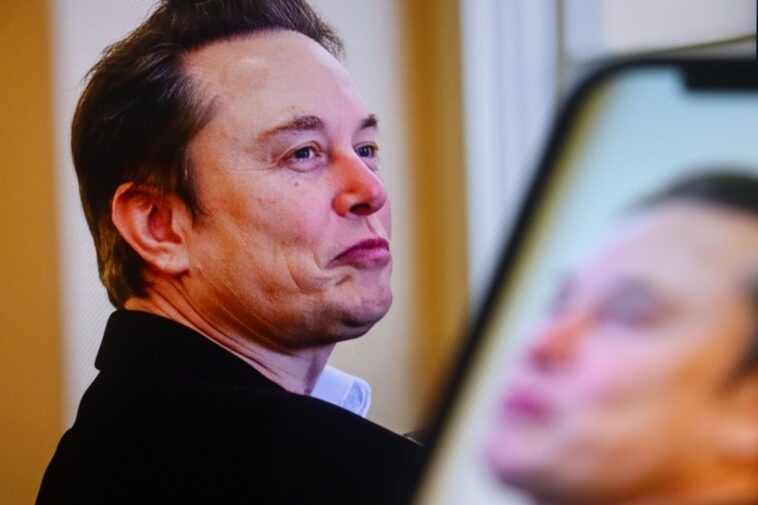
Elon Musk has announced a new creative venture that blends classical literature with cutting‑edge technology: an AI‑generated adaptation of The Odyssey designed to be historically accurate and visually ambitious. The project, shared across his platforms, signals Musk’s intention to push artificial intelligence into the realm of cultural preservation and cinematic storytelling, positioning technology as a tool to revisit ancient narratives with renewed depth.
The initiative arrives at a moment when AI is rapidly expanding into creative industries. Musk’s proposal stands out for its focus on historical fidelity, aiming to reconstruct the world of Homer with meticulous detail. Rather than reimagining the poem through a modern lens, the project seeks to recreate the landscapes, customs, and mythological elements of ancient Greece using advanced generative systems capable of analyzing archaeological research, linguistic studies, and artistic references.
According to Musk, the goal is to demonstrate how AI‑assisted storytelling can support cultural heritage by offering audiences immersive interpretations of foundational texts. The adaptation is expected to combine human direction with AI‑driven world‑building, creating a hybrid production model similar to recent experiments in digital filmmaking. This approach allows creators to maintain narrative control while leveraging computational tools to enhance accuracy and scale.
The announcement has sparked curiosity across entertainment and academic circles. Scholars note that a historically grounded version of The Odyssey could offer viewers a fresh perspective on the epic, moving away from stylized Hollywood interpretations and toward a portrayal rooted in ancient Mediterranean life. Meanwhile, technologists see the project as an opportunity to showcase how AI can contribute to large‑scale creative work without replacing human artistry.
Musk’s adaptation also reflects a broader trend: the use of AI to revisit classical literature, reconstruct ancient cities, and visualize historical events with unprecedented precision. These tools allow creators to merge research and imagination, producing works that feel both educational and cinematic. For audiences, this means access to stories that honor their origins while embracing modern innovation.
The project arrives during a period of intense debate about AI’s role in entertainment. While concerns persist about authenticity and creative labor, Musk’s proposal positions AI as a supportive instrument rather than a substitute. By emphasizing historical accuracy and human oversight, the adaptation aims to demonstrate a positive, collaborative path forward.
As development begins, expectations are high. A faithful, AI‑enhanced Odyssey could become a landmark example of how technology can illuminate the past, offering viewers an epic that feels both timeless and newly alive. Musk’s initiative suggests that the future of storytelling may lie not in replacing tradition, but in expanding it through tools that bring ancient worlds closer to modern audiences.